DHgate-online wholesale stores
- 4.1
- Rating
- 10.00M
- Installs
- Free
- Price

 Analysis by App-foxy
I spent time with DHgate as a shopping app, and my first impression was that it is built for browsing rather than quick, predictable retail purchases. Its focus is wholesale stores, so the experience feels closer to exploring a very large marketplace than walking into a neatly curated shop. That can be exciting when I am looking for unusual products, bulk quantities, or lower-cost alternatives, but it also means I need more patience than I would with a conventional shopping app.
The app is free to use, comes from dhgate.com, and has been available since September 14, 2016. Its audience is broad: casual shoppers can browse individual listings, while small sellers and people buying for events may find the wholesale angle more useful. I would not describe it as a replacement for every online retailer. I see it as a discovery tool for people willing to compare listings carefully and manage the extra uncertainty that comes with a marketplace built around many independent stores.
How connectivity shapes the shopping experience
I find that a reliable connection does more than make DHgate load faster: it gives me room to compare options without turning a purchase into guesswork. When I plan a shopping session, I use weaker-signal moments for deciding what I need, then save the detailed listing checks for when I can view the pages properly. That small split keeps browsing purposeful and makes it easier to move from comparing choices to placing an order with care.
You May Also Like

 Blood Strike: 2.5 Anniversary
Blood Strike’s Loadouts Turn Every Drop Into a Tactical Gamble
A close look at Blood Strike’s custom loadouts: how fast access to signature weapons reshapes its battle royale rhythm, rewards preparation, and narrows the gap between fights.

 Pandora - Music & Podcasts
Pandora’s Music Is Easy to Start, but Harder to Recover
Pandora’s strength is its low-effort path from a seed to a station. Its weak spot is how much confidence it asks you to place in connection, setup, and quiet recovery.

 8 Ball Pool
 Is Built on Rivalries, Rematches, and Routine
A close look at the rivalries, rematches, shared routines, and unanswered safety questions that turn a quick pool match into a persistent mobile community.

 Samsung Music
’s Quiet Strength Is Playing What You Already Own
Its reach comes less from spectacle than from dependable access to a personal library. That simplicity is both the app’s strongest retention engine and its ceiling.

 AccuWeather: Weather Radar
AccuWeather Review: A Quick, Clear Forecast for Everyday Decisions
For everyday plans, the best forecast is the one you can understand quickly. AccuWeather makes rain timing, radar, and local conditions easy to act on, with a few trade-offs.

 Hill Climb Racing
Why Hill Climb Racing Still Turns Crashes Into One More Run
A tiny car, a bumpy hill and one more upgrade: Hill Climb Racing keeps resurfacing because its simple chaos makes every near-miss feel personal.
More From Our News Desk
View All News


Browsing depends on a steady connection
The most important part of using DHgate is the network connection. Product discovery involves loading images, listing details, seller information, variations, and purchase-related screens. When my connection is stable, I can move from one listing to another and compare options naturally. When the connection becomes weak, the experience loses its rhythm: images take longer to appear, pages may need another attempt, and comparing several products becomes frustrating.
This matters more here than in a small catalog because the app encourages exploration. I might begin with one item and then open related offers, different quantities, or alternative sellers. Each step depends on fresh marketplace information. A slow connection does not merely delay one screen; it interrupts the process of deciding whether a product is worth considering at all.
I found it useful to treat the app as something for connected browsing rather than something to open casually in a dead signal area. If I am in a basement, on a crowded train, or moving between weak mobile coverage zones, I prefer to wait until the connection is reliable before making comparisons or starting a checkout. That simple habit reduces repeated loading and makes it easier to notice the details that matter.
Images are part of the decision, not decoration
On a wholesale marketplace, photos do a lot of practical work. They help me judge finish, color, packaging, dimensions, and whether a product looks suitable for a particular use. A connection that loads text but struggles with images is therefore not good enough for serious shopping. I may be able to read a title, but I cannot make a confident decision without seeing the listing properly.
My advice is to let a product page finish loading before comparing it with another one. Jumping between partially loaded listings can create a false impression that one seller has fewer details or weaker presentation, when the real problem is simply the connection. It is also worth checking the same item from more than one seller instead of assuming the first result is automatically the best choice.
Messages and order steps need attention
Wholesale shopping often raises questions that ordinary retail purchases do not. I may want to clarify a variation, ask about quantity, or confirm whether a listing matches a particular need. Those conversations are especially dependent on connectivity because a delayed message or a screen that fails to refresh can leave me unsure whether an action went through.
I avoid tapping repeatedly when a page appears slow. Repeated taps can make it difficult to tell whether a message, selection, or order step has been accepted. Instead, I pause, check the screen again, and reopen the relevant area if necessary. That is a small but valuable workflow when using any marketplace app, and it feels particularly important here because one listing can contain several choices that are easy to confuse.
Using it in everyday mobile situations
A realistic use case is planning supplies for a small event. I might be arranging decorations, packaging, accessories, or inexpensive items for a group rather than buying one product for myself. In that situation, I can browse during a commute, save ideas mentally, and return to the comparison when I have a stronger connection. The app is useful for discovering possibilities, but I would not rush through the final decision while distracted or offline from a dependable network.
Another scenario is a small online seller looking for packaging or stock. The wholesale orientation makes the search more relevant than a standard supermarket-style shopping app. However, the seller still needs to think about quantity, consistency, and whether a low unit cost justifies the commitment. A good connection helps with research, but it does not remove the need to inspect the listing and think through the order carefully.
What happens when the connection fails
Connectivity problems can occur at several points: while opening the app, loading search results, viewing images, moving between variations, or reaching an order screen. The most frustrating moment is when I have already invested time comparing products and then the next screen does not load. I may not know whether the issue is temporary, whether the selection was retained, or whether I need to start again.
My recovery method is deliberately cautious. I first wait rather than immediately repeating the same action. If the screen remains stuck, I return to the previous page and reopen the listing. If that does not help, I close and relaunch the app, then check the relevant order or account area before attempting anything again. The key is to verify the current state before repeating a purchase-related action.
I also keep a simple note of the product title, selected variation, and seller when I am doing serious comparison work. This is not a DHgate feature; it is a practical safeguard for mobile shopping. If the app reloads or I lose my place, I can find the same listing again without relying on memory. For a marketplace with many similar offers, that can save more time than endlessly scrolling through search results.
Connectivity and the risk of rushed decisions
A weak connection can create a subtle shopping problem: it encourages me to make decisions before I have seen enough information. If one image loads but another does not, I may assume the listing is straightforward. If seller details or variations appear late, I may overlook an important choice. I try not to treat a partially loaded page as a complete page, especially when the purchase involves multiple units.
This is one reason I prefer using DHgate when I have time to compare rather than when I need an item urgently. A local store or a conventional retailer with a simpler checkout is usually better for a last-minute purchase. DHgate rewards research, and research is difficult when the network is unstable or when I am trying to shop in a hurry.
Using mobile data thoughtfully
Because product browsing can involve many images and repeated page loads, I would be careful when using a limited mobile-data plan. I do not need to avoid the app entirely, but I would avoid endless image-heavy browsing when I am away from Wi-Fi. A focused search is more sensible than opening every related listing simply because it appears interesting.
My preferred approach is to narrow the search before opening many products. I decide what I actually need, identify a few useful search terms, and compare a manageable group of listings. This reduces unnecessary loading and makes the final choice clearer. It also helps prevent the common marketplace habit of collecting dozens of possibilities without deciding what matters most.
When I have access to a dependable Wi-Fi connection, I use that time for deeper research: checking several sellers, reviewing variations, and looking again at product photos. On mobile data, I keep the session shorter and more purposeful. This division of tasks makes the app feel less demanding and helps me avoid wasting data on listings I was never likely to buy.
Why the wholesale model changes the trade-off
The wholesale focus is both the app’s appeal and its main limitation. If I want a broad selection of products, supplies for a project, or items that are difficult to find in nearby stores, the marketplace can be worth the extra effort. If I only need one urgent item with a simple return expectation and a highly predictable delivery experience, I would usually choose a more traditional retailer.
Compared with a standard shopping app, DHgate asks me to do more evaluation myself. I pay attention to the exact listing, the chosen option, the quantity, and the seller context instead of assuming that every result follows the same retail standard. That is not necessarily a flaw, but it changes who will enjoy the experience. People who like hunting for deals and comparing suppliers may find it rewarding. People who want a short path from search to guaranteed simplicity may find it tiring.
Who will get the most from it?
I think DHgate is best suited to patient shoppers, small businesses, event planners, hobbyists, and anyone comfortable comparing marketplace listings. The wholesale angle is particularly useful when buying several related items or searching for a wider range than a local shop can offer. It can also be interesting for shoppers who enjoy discovering products rather than starting with one familiar brand.
I would be more cautious about recommending it to someone who needs an item immediately, dislikes reading listing details, or wants every purchase to feel identical to a major retailer’s streamlined process. It is also not my first choice when I have no time to investigate alternatives. The app can open up more possibilities, but more possibilities mean more responsibility for the shopper.
What the numbers suggest about its place in shopping
The app has reached over ten million installs, with an average rating of 4.1 from around 545 thousand ratings and roughly 101 thousand written reviews. Those figures suggest that DHgate has a substantial, active audience, while the rating also feels consistent with a marketplace that can work very well for some shoppers and require extra care from others.
It is rated for Teen users, and the current version is 7.0.0 with a minimum operating-system requirement of version 9. That makes compatibility fairly approachable for people using supported devices, although the quality of the experience will still depend heavily on connection strength, screen size, and how comfortably someone can compare detailed listings on a phone.
Small habits that improve the experience
- Compare the complete listing, not only the first photo. I wait for the page to load fully and check the selected variation before deciding that two offers are equivalent.
- Separate discovery from commitment. I browse freely during an exploratory session, then return later to make a purchase when I have a stable connection and enough time to review the choice.
- Record identifying details during serious research. Saving the product title, seller name, and chosen option in a note helps me recover quickly if mobile connectivity interrupts the session.
- Use a focused search on mobile data. I open fewer listings and reserve broad comparison sessions for a stronger connection, especially when product photography is central to the decision.
- Check the order state before retrying. If a checkout screen appears slow, I avoid repeated taps and verify whether the action already registered before starting again.
How it compares with familiar alternatives
Against a conventional retailer, DHgate offers a more marketplace-driven experience. A familiar retailer is often easier when I know exactly what I want and value a consistent presentation. DHgate is more attractive when I want to explore wholesale stores, compare a wider set of offers, or look for products suited to a project rather than a routine household purchase.
Compared with a local store, it is less convenient for immediate needs but potentially more useful for planning ahead. A local shop lets me inspect an item directly and take it home quickly. DHgate gives me a broader digital search, but I need to be more deliberate about the listing and the purchase decision. The right choice depends less on which app is universally better and more on whether I value speed and certainty or selection and discovery.
My overall verdict
My experience with DHgate is positive when I use it as a research-heavy marketplace instead of a one-tap shopping shortcut. The app is free, the wholesale focus is clear, and it can be genuinely useful for bulk-oriented shopping, unusual finds, and comparing suppliers. Its large user base gives it the feel of an established destination, but the rating also reminds me not to expect a frictionless experience for every purchase.
The best reason to use DHgate is the combination of breadth and wholesale discovery; the main reason to hesitate is the extra attention required from the buyer. A stable connection makes browsing, image checking, and order review much easier, while weak connectivity can turn a careful comparison into a rushed guess. I recommend it to people who have time to investigate and who are comfortable managing a marketplace search. For urgent, highly predictable purchases, I would choose a simpler alternative. For planned shopping where variety and quantity matter, DHgate is worth keeping on the phone.
FAQs for DHgate-online wholesale stores
01What is DHgate and how does it work?
DHgate is an online wholesale marketplace that connects buyers with Chinese manufacturers and suppliers. Users can browse a vast range of products, including electronics, clothing, and more. The platform allows businesses and individuals to purchase items in bulk at lower prices. Transactions are secure, and the app provides tools for tracking orders and managing purchases.
02Is DHgate safe and reliable for purchasing goods?
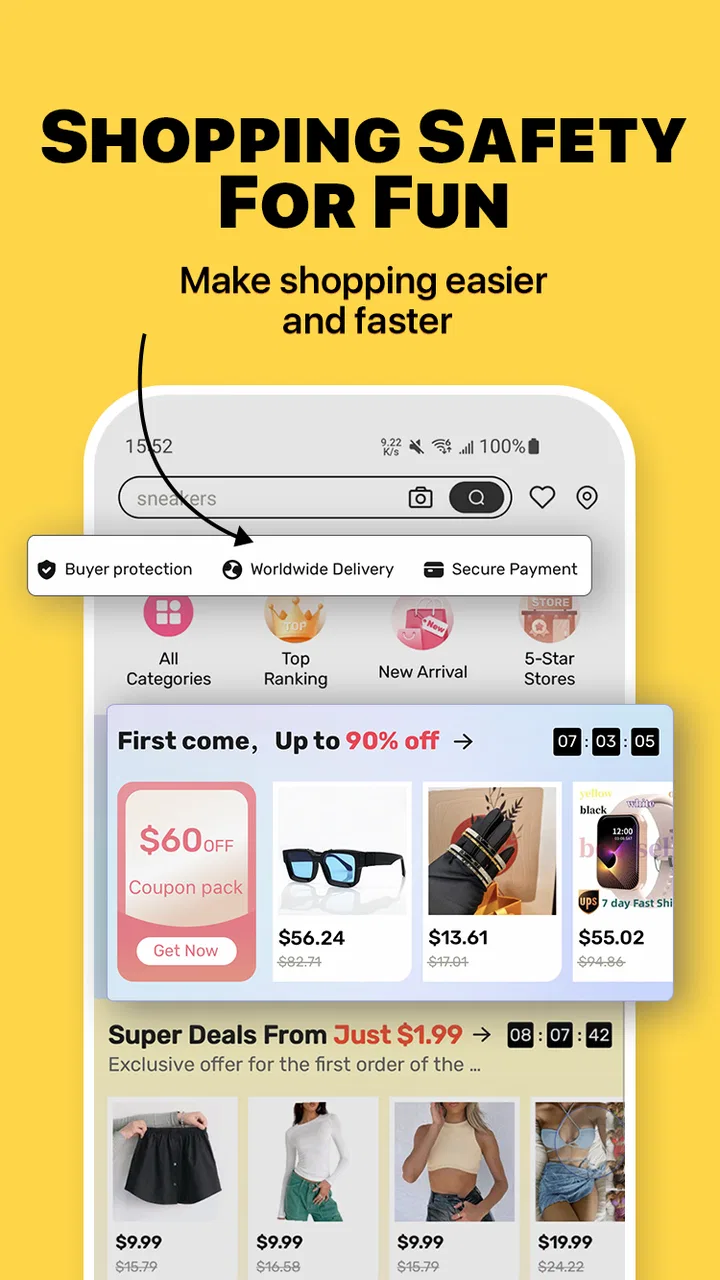
Yes, DHgate is generally considered safe and reliable. The platform uses secure payment methods and offers buyer protection policies to ensure that users receive the products they ordered in satisfactory condition. However, it’s important for users to carefully review seller ratings and product reviews before making a purchase to ensure a positive experience.
03How are shipping and delivery handled on DHgate?
Shipping and delivery times on DHgate vary depending on the seller and the shipping method selected. Some sellers offer free shipping, while others may charge additional fees. It’s crucial to check the estimated delivery times on the product listing page. Users can track their orders through the app once the seller ships the items.
04What should I do if I encounter issues with an order on DHgate?
If you encounter issues with an order, such as receiving the wrong item or a defective product, you should contact the seller directly through the DHgate app. If the issue isn't resolved, you can open a dispute within the app to seek a resolution. DHgate’s customer service team can assist if further help is needed.
05Can I return items purchased on DHgate?
Yes, returns are possible, but the policy varies by seller. Before purchasing, it’s advisable to review the seller’s return policy, which is typically listed on the product page. If a return is necessary, the buyer must usually initiate the process within a specified timeframe and may be responsible for return shipping costs.
Pros
- Wide range of products available.
- Competitive prices for bulk purchases.
- User-friendly interface for easy navigation.
- Secure payment options available.
- Global shipping to many countries.
Cons
- Some sellers have inconsistent quality.
- Shipping times can be quite long.
- Customer service response can be slow.
- Occasional language barriers with sellers.
- Refund process can be cumbersome.

DHgate-online wholesale stores
Gallery